ReBayes
A randomized clinical trial reports P = 0.04. How likely is it that the effect is real? Many people will answer “about 4%”. But this is wrong, because the probability of the data given no real effect exists (the P value) is not the Probability of a Real Effect Given the Data (or PEGD). ReBayes takes the results from the paper and answers that question — the one a P value cannot. Oh, and it also does a lot more, including calculating a fragility index.
Coming to the App Store Use it in a browser Support
The question a P value cannot answer
Ask a room of clinicians what P = 0.04 means and many will say there is a 4% chance the result is a fluke. It does not mean that. A P value is the probability of seeing results like these if there were no real effect; it says nothing about how probable a real effect is. To get from one to the other you need to say how plausible the effect was before the trial — and then let the trial's evidence update it. That is what ReBayes does.
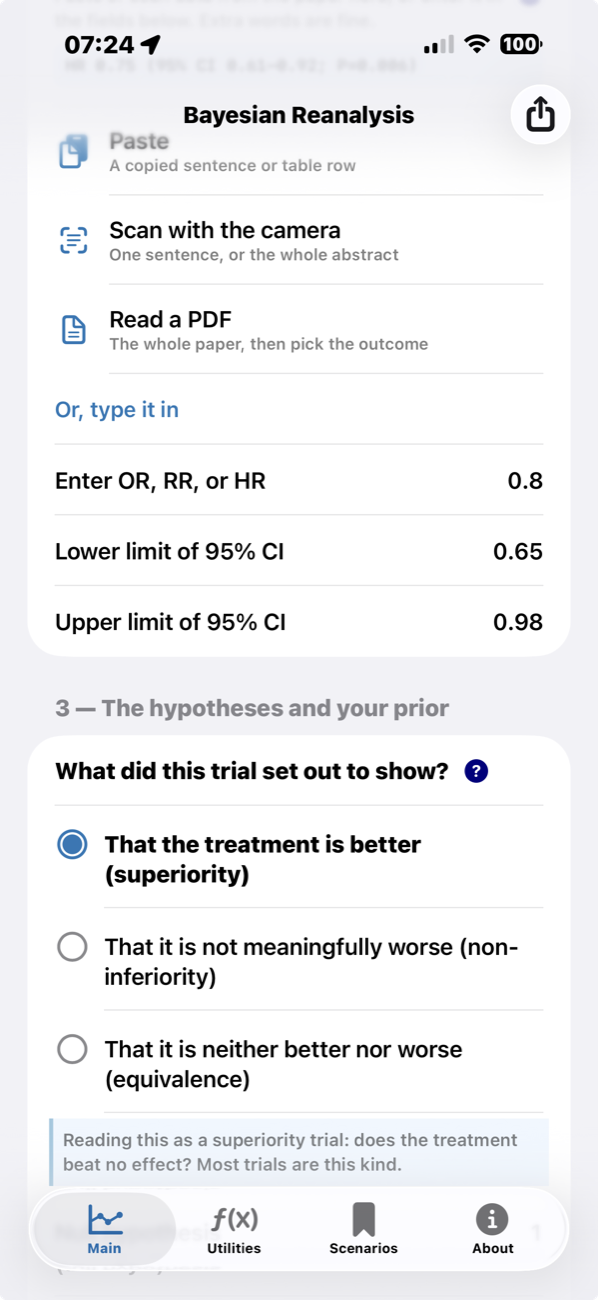
What you give it
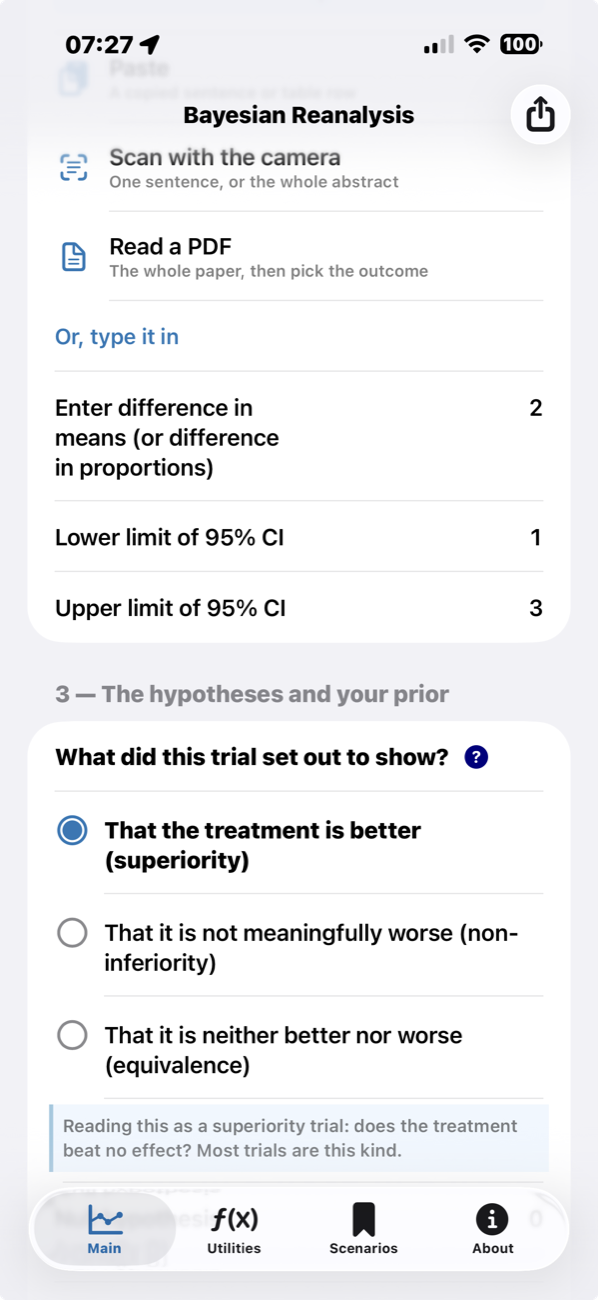
The three numbers every paper prints: the estimate, its confidence interval, and the effect the investigators said they were looking for when they planned the study. You can type them, paste a sentence from the paper, share a PDF into the app and choose from the results it finds, or point the camera at the page.
What you get back
Is it real?
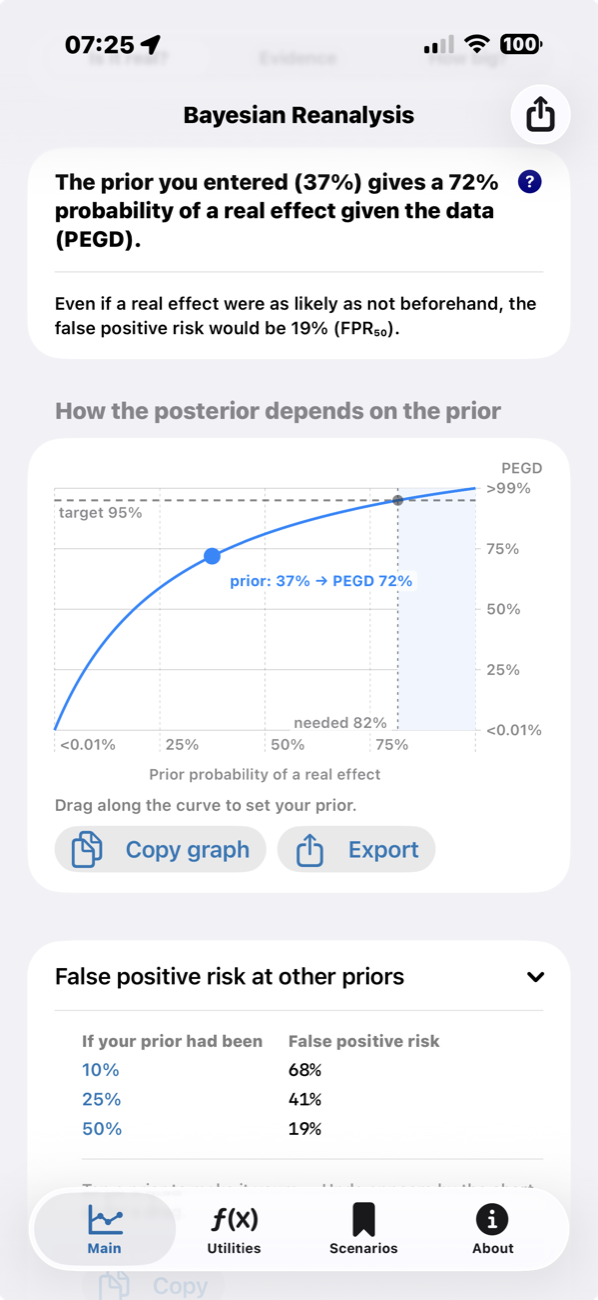
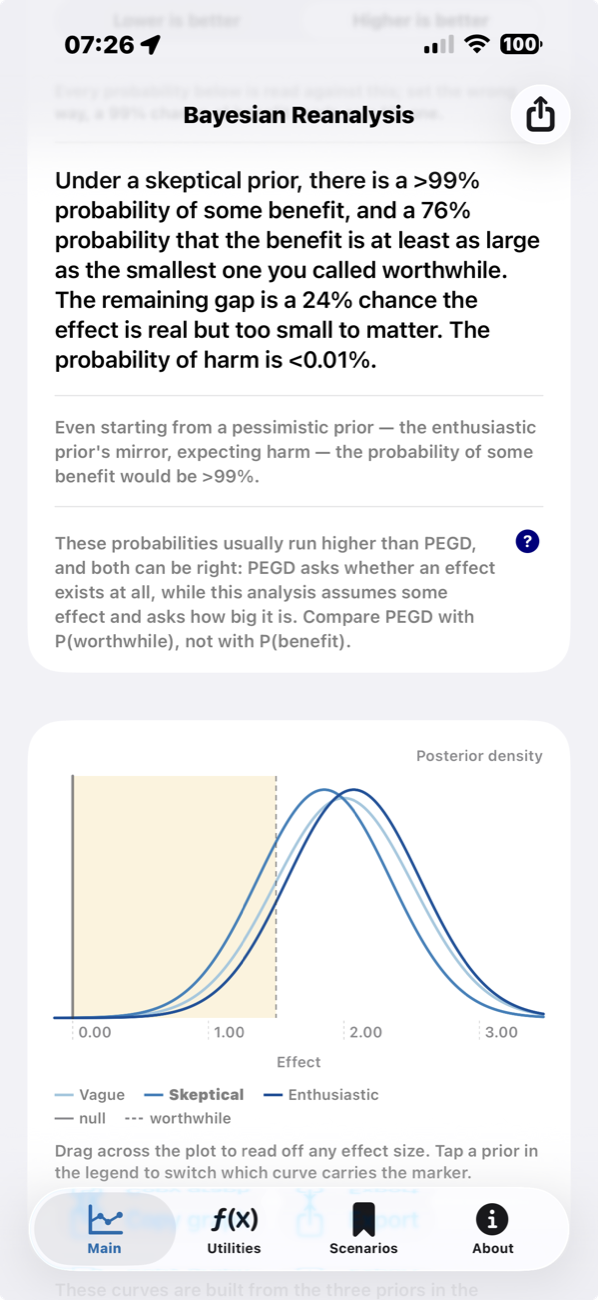
The probability that the effect is real given the data, for whatever level of prior belief you choose — and the level of belief the result would need in order to convince you.
How strong is the evidence?
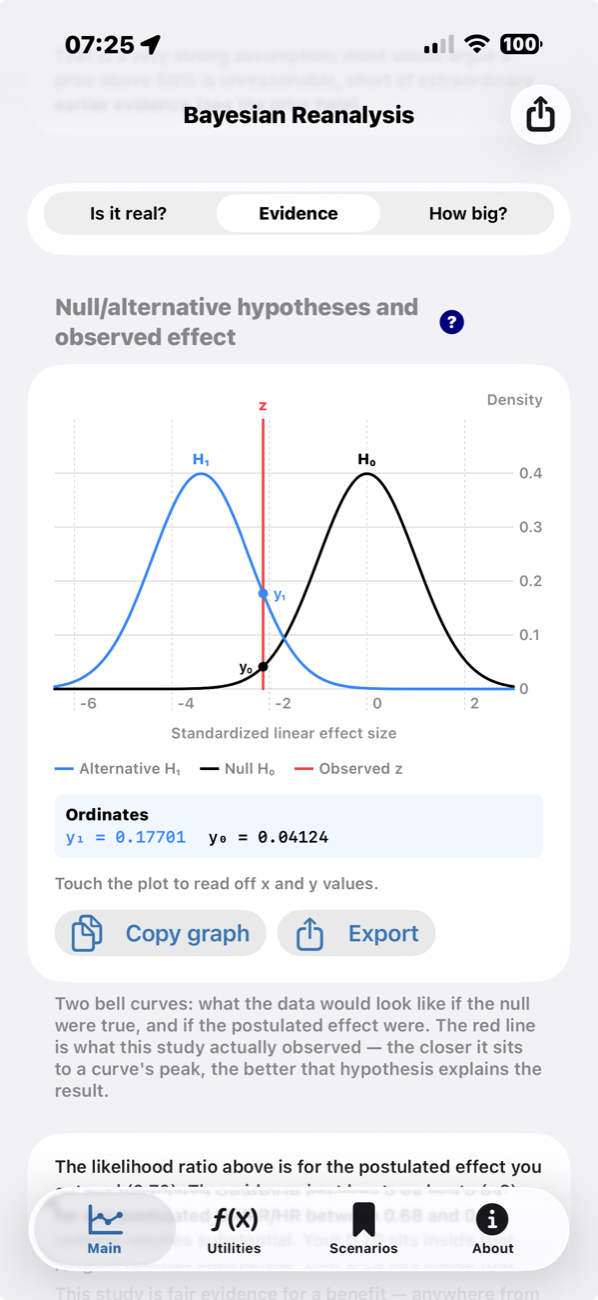
The likelihood ratio: how much more likely these results are under a real effect than under none, in plain words as well as numbers.
How big is it?
The effect restated in patients per hundred, and what a sceptic, an enthusiast and someone with no view at all would each conclude from the same trial.
How fragile is it?
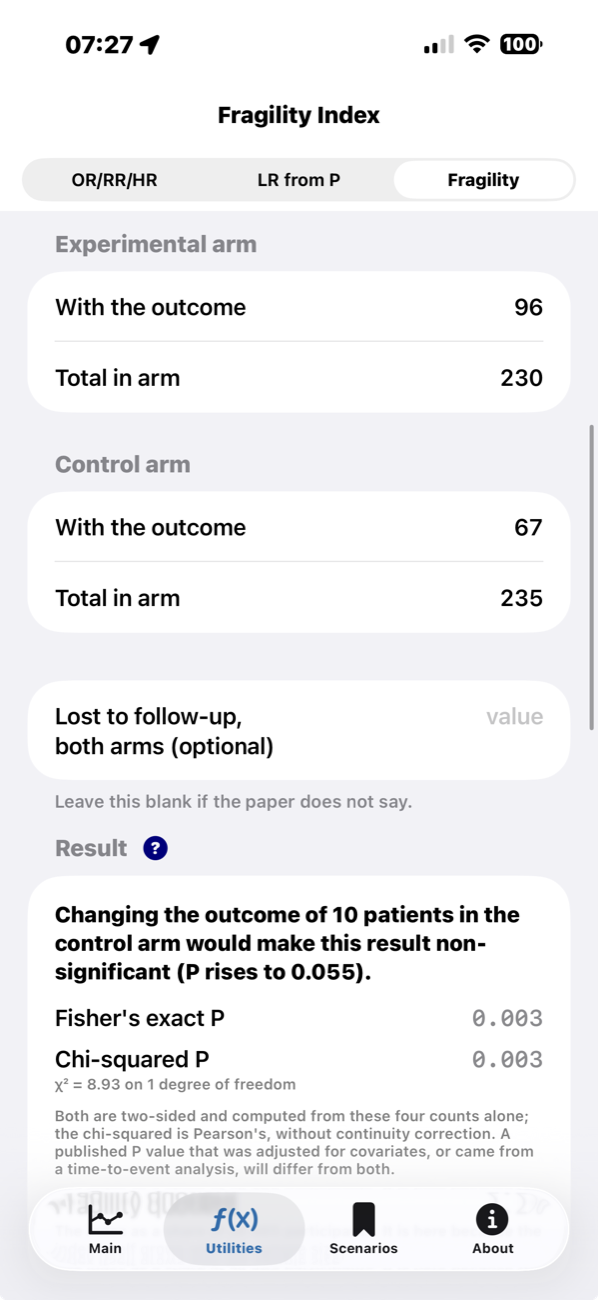
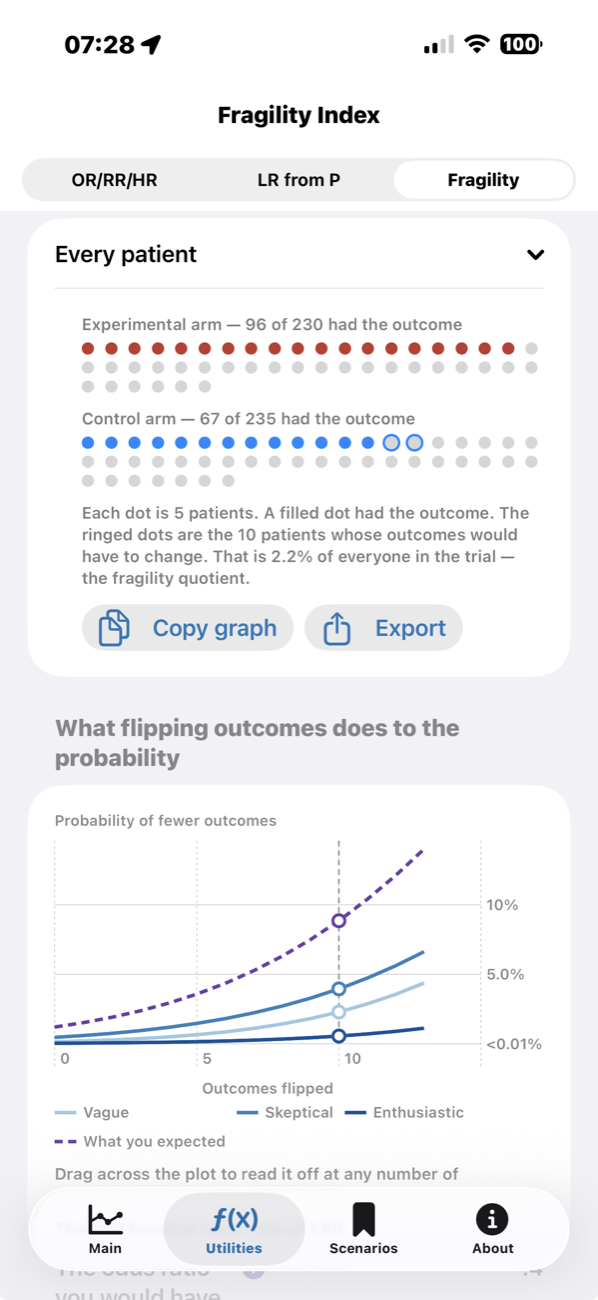
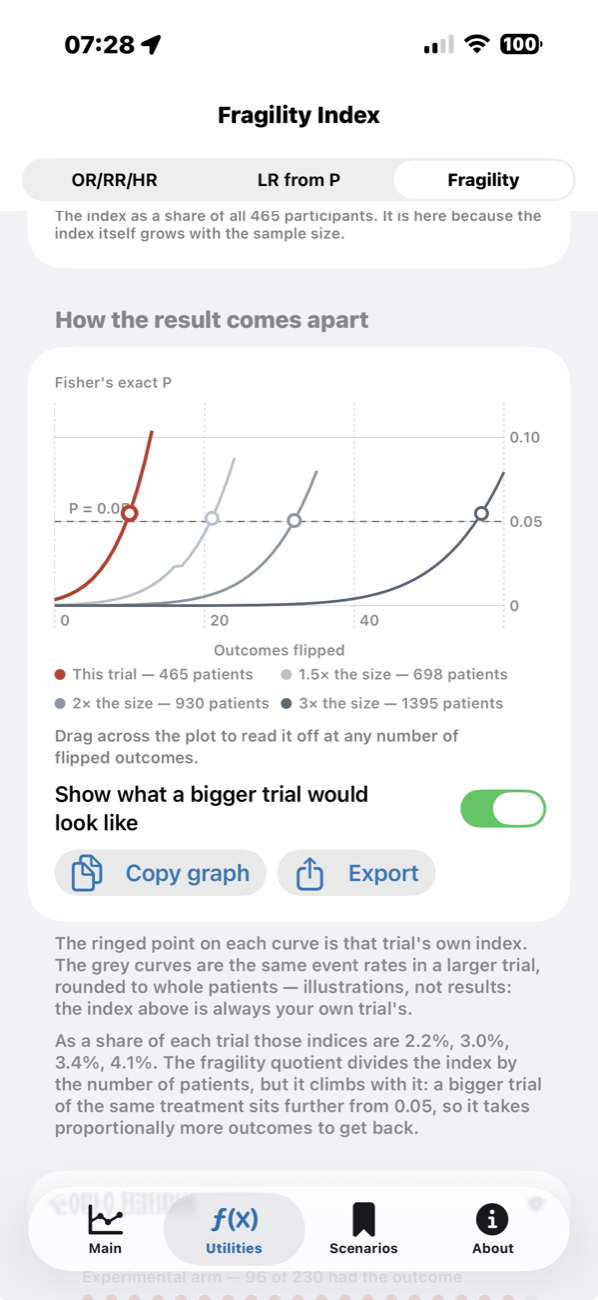
How many patients' outcomes would have to change for the result to lose significance, and whether a negative trial has actually shown "no effect".
Written for the reader you have
ReBayes writes out what a result means in two versions: one in plain English for a colleague, a journal club or a note in the chart, and one in technical terms for a paper or a referee, with the citation. They are the same numbers, said to different readers. Copy whichever suits.
Where the method comes from
The calculations follow published methods — Colquhoun's false-positive risk, Held's reverse-Bayes analysis, Matthews' critical prior interval, Spiegelhalter's sceptical and enthusiastic priors, and the fragility index — and every one is cited inside the app, with the working shown. The method is described in Jones PM, Martin J. BJA Education 2026;26:10–19.